There are still corners of this planet that geography books and travel magazines haven’t fully uncovered. Places where time doesn’t just slow down it completely resets.
If you are a traveler who craves the raw thrill of discovery, the journey from Eritrea’s capital, Asmara, to the wild solitude of the Dahlak Archipelago is not just a vacation. It is a defining travel experience. It is the ultimate contrast of human artistry and untouched marine wilderness, nestled quietly along the edge of the Red Sea.
Asmara: A Time Capsule in the Horn of Africa
Your journey begins over 2,300 meters above sea level in Asmara, a city so architecturally significant it has been designated a UNESCO World Heritage site. Walking through its streets feels like stepping onto a 1930s cinematic set.
Known affectionately as Africa’s “Little Rome,” Asmara holds one of the world’s most concentrated collections of Futurist and Art Deco architecture.
- You’ll find the iconic Fiat Tagliero building, a modernist service station designed to look like an airplane poised for takeoff.
- You’ll walk past the grand, neon-lit facade of Cinema Impero.
- Most importantly, you will experience a distinct, slow-paced café culture. Here, the aroma of freshly brewed macchiatos fills the air, and locals spend afternoons conversationalizing on wide, palm-fringed sidewalks.
The Descent to the Red Sea: Massawa
Leaving the cool mountain air of Asmara, you descend through dramatic, winding mountain passes down to the historic port city of Massawa.
Massawa is a place where the air grows warm and salty, carrying the scents of the Red Sea. Its old town is a beautiful, labyrinthine ghost of history, showing the distinct architectural thumbprints of Ottoman, Egyptian, and Italian eras. It serves as the historic gateway and the launching pad into one of the most pristine marine ecosystems left on Earth.
The Dahlak Archipelago: A Wilderness Frozen in Time
Stepping onto a boat from Massawa, you leave the modern world entirely behind. The Dahlak Archipelago is a cluster of over 200 islands scattered across the turquoise waters of the Red Sea. Because these islands remained isolated for decades, nature has been allowed to thrive completely uninterrupted.
This is a marine paradise in its purest, wildest form.
A Diver’s Last Frontier
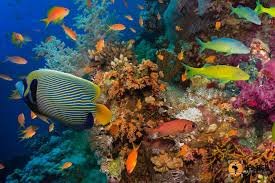
The underwater world here is an explosion of life. Fringed by vibrant, untouched coral reefs, the waters teem with over 1,000 species of fish. It is common to mask up, slide into the warm water, and instantly find yourself swimming alongside sea turtles, manta rays, and pods of curious dolphins. For history buffs, the sea floor holds a museum of twentieth-century shipwrecks, silently claimed by the coral.
Desolate Beauty and Deep History
On land, the islands are beautifully harsh, sun-bleached landscapes of fossilized coral and white sandbanks. But they are far from empty of story.
- On the largest island, Dahlak Kebir, you can wander through 10th-century Islamic necropolises and ancient cisterns carved into the rock to catch rainwater.
- You can visit timeless, remote fishing villages inhabited by the Dahalik people, whose lives are governed entirely by the tides and the wind.
There are no luxury resorts here. Visiting the Dahlaks is a true expedition. You spend your days exploring uninhabited sandspits and your nights camping in canvas tents on deserted beaches, falling asleep to the sound of the Red Sea under a canopy of stars so bright they light up the sand.
Why You Have to See It in Your Lifetime
We live in an era where almost every travel destination has been packaged, polished, and presented on a silver platter. The Dahlak Archipelago is the antidote to modern, crowded tourism. It demands a bit of grit, a love for true wildness, and an appreciation for raw history.
It is a place that makes you realize how beautifully vast the world still is.
Navigating the Road Less Traveled
Because Eritrea is so beautifully untouched, it is not a destination where you can simply book a flight, rent a car, and wing it.
The journey from the highlands of Asmara to the remote islands of the Red Sea requires careful, expert navigation. Traveling outside the capital requires specialized government permits, independent boat charters must be secured in Massawa, and camping on uninhabited islands means mapping out every drop of fresh water, fuel, and supply well in advance.
It is a logistically complex expedition but for those who cross the sea to find it, the reward is a piece of earth entirely to yourself.
Are you ready to step off the map? Let’s start planning your journey into the heart of the Red Sea.